


Wildlife of the Royal Gorge Region
The Royal Gorge is known for its breathtaking views, towering cliffs, and unforgettable adventures—but it’s also home to an incredible variety of wildlife. From soaring birds of prey to elusive nocturnal mammals, the rugged terrain surrounding the Arkansas River creates the perfect habitat for many of Colorado’s most iconic animals.
Whether you’re crossing the bridge, riding the gondola, or exploring scenic overlooks, keep your eyes open—you never know what you might spot in the Royal Gorge region.
Bighorn Sheep
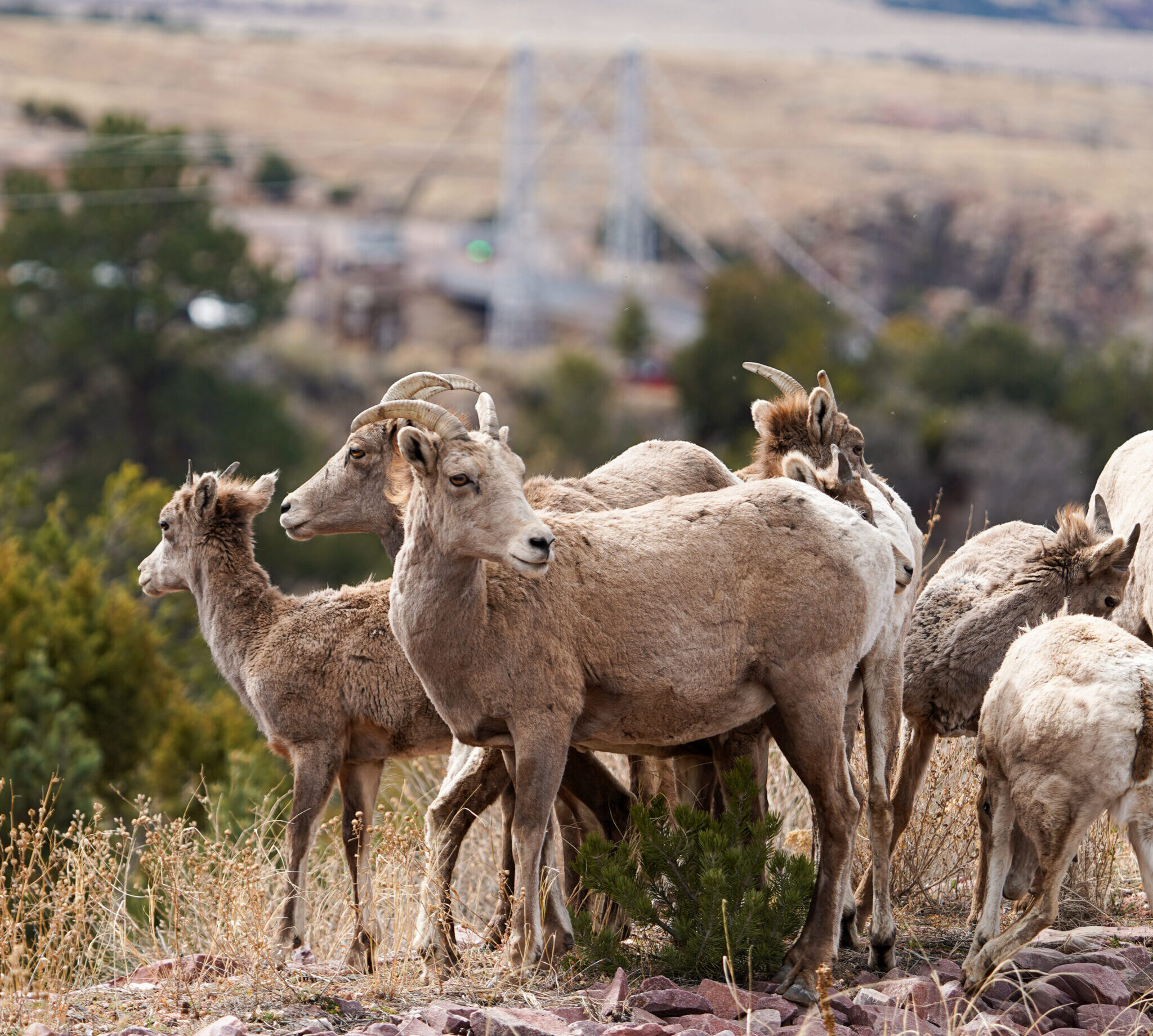
One of the most recognizable animals in Colorado, bighorn sheep are frequent visitors to the Royal Gorge area. These agile climbers are perfectly adapted to rocky terrain and are often spotted along the south side of the Gorge navigating steep cliffs with ease.
Male bighorn sheep, known as rams, are especially recognizable for their large curved horns, while females and younger sheep typically travel together in smaller groups. Watching them move effortlessly across rugged canyon walls is an unforgettable sight and a reminder of how wild the landscape surrounding the Gorge truly is.
As always, guests should remember that bighorn sheep are wild animals and should be viewed from a safe distance.
Turkey Vultures
With their massive wingspans and slow, soaring flight patterns, turkey vultures are a common sight gliding above the Royal Gorge. These birds play an important role in the ecosystem as natural scavengers, helping keep the environment clean.
During warmer months, it’s not unusual to see several turkey vultures catching thermals above the canyon walls. Their silhouette against the sky has become a familiar part of the Gorge landscape.
Though they may look intimidating at first glance, turkey vultures are harmless to humans and are fascinating examples of nature’s efficiency.
American Kestrels
The American kestrel may be North America’s smallest falcon, but it’s also one of the most colorful and striking birds in the region. Known for their quick movements and ability to hover in place while hunting, kestrels are occasionally spotted perched along fences, cliffs, or open areas throughout the Gorge.
Their vibrant rust-colored feathers and blue-gray wings make them especially beautiful to spot against the Colorado landscape.
Birdwatchers visiting the Royal Gorge region often keep an eye out for kestrels, as they are both elusive and incredibly photogenic.
Mule Deer
Mule deer are among the most commonly spotted large mammals in the Royal Gorge region and are well adapted to the rugged Colorado landscape. Recognizable by their large ears, slender build, and graceful movements, these deer are often seen in the early morning or evening hours near brush-covered hillsides and open terrain.
Unlike bighorn sheep, mule deer tend to be quieter and more cautious, often blending naturally into their surroundings. Spotting one along the rim of the Gorge or in the surrounding landscape is a peaceful reminder of the diverse wildlife that calls this region home.
Ringtails
Perhaps the most mysterious animal on this list, the ringtail is a rarely seen nocturnal mammal sometimes found in rocky canyon environments throughout the American Southwest and parts of Colorado. Despite their cat-like appearance, ringtails are actually related to raccoons.
With large eyes, excellent climbing abilities, and distinctive striped tails, these secretive creatures are masters of navigating rocky cliffs and crevices after dark.
Most visitors will never spot one during the daytime, but knowing they inhabit the region adds another fascinating layer to the wildlife of the Royal Gorge.
Experience the Wild Side of the Royal Gorge
The Royal Gorge is more than just an incredible destination—it’s part of a living, thriving ecosystem filled with remarkable wildlife. Every visit offers the chance to experience something new, whether it’s spotting bighorn sheep along the cliffs or watching birds soar above the Arkansas River.
As you explore the Gorge, remember to respect wildlife by observing from a safe distance and helping preserve the natural beauty that makes this region so special.